Embracing the Stall: How to Navigate a Progress Plateau
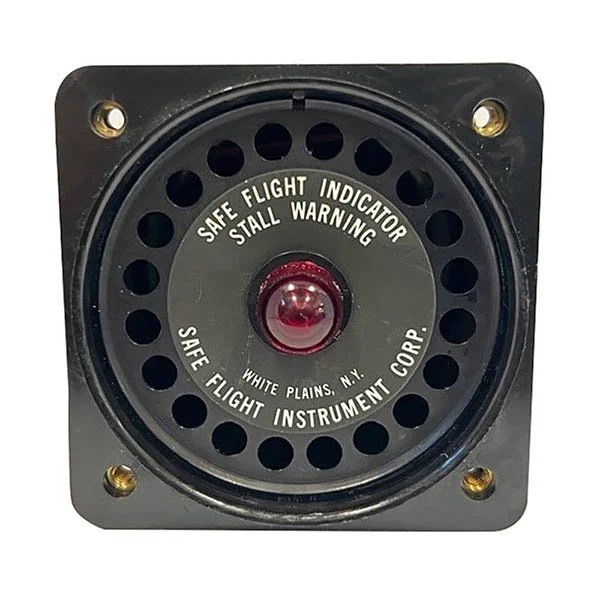
It starts with a feeling in the pit of your stomach, a growing realization that despite the hours you are pouring in, the needle isn't moving. You pick up your instrument, you sit at your desk, you lace up your shoes, but the result is the same as yesterday. And the day before. The rush of early improvement has vanished, replaced by a dull, grinding frustration.
This is the heartbreak of the halt. You are putting in the work, but the return on investment seems to have evaporated.
But here is the truth few people talk about: Hitting a progress plateau is not a sign of failure. It is an unavoidable part of the journey toward progress. Whether you are shredding on a guitar, learning a new language, or building a business, the ascent is never a straight line. You are standing at a fork in the road. How you respond, not to just the moment of frustration but long term will decide if you get over the hurdle or not. The amateur gets frustrated and walks away. The professional digs in, understanding that the plateau is not a dead end, it's a matter of time.
In this guide, we will explore why you feel stuck (and why you probably aren't), look at a real-world case study of perception versus reality, and arm you with the resilient, game-like mindset needed to push through the boredom and find the breakthrough waiting on the other side.

The Illusion of Stagnation: Are You Actually Stuck?
Feelings are powerful indicators of our emotional state, but they are terrible metrics for progress. When you are in the trenches of daily practice, you lose perspective. You can’t see the forest because you are staring at the bark on a single tree. Sometimes taking a break from the specific challenge can be enough to back up but there's more.
Data vs. Feeling
The first step in navigating a plateau is to separate your emotions from the hard data. We often feel like we aren't moving because we have forgotten where we started. If you rely solely on how you feel about your session today compared to yesterday, you may often feel stagnant. Improvement at the intermediate and advanced levels is microscopic.
Track tangible data. Record yourself. Keep a log. If you look at a recording from six months ago, you will likely realize that your "bad day" today is better than your "best day" back then.
The Curse of "Better Eyes"
There is a cruel irony in skill development: as you get better, your ability to spot flaws improves with your overall skillset. We call this the curse of "better eyes" (or better ears).
What feels like a plateau is often just an upgrade in your perception. Your standards have risen. You are hearing buzzing notes you used to ignore. You are seeing inefficiencies in your form that didn't bother you last month. You haven't gotten worse; your taste has just gotten better.
Reframing the Problem
This phase requires a mental shift. Instead of beating yourself up for the flaws you are suddenly noticing, recognize them for what they are: signs of expertise. You are developing the critical eye of a master. The fact that you are dissatisfied is proof that you are ready for the next level. Progress on the instrument is always a journey between two points: one where you are content with your abilities and one where you are not.

The Guitarist’s Dilemma: A Case Study in Perception
To understand the mechanics of a plateau, let’s look at a classic scenario: the speed-obsessed guitar student.
The Speed Trap
The student has one goal: play fast. They spend hours drilling scales, pushing the metronome higher. They measure success strictly by beats per minute. For a while, it works.
The Hidden Flaw
Then, suddenly, they hit a wall. They reach a tempo where everything falls apart. After listening to a recording of themself they realize the tempos they could handle didn't sound very good either; they were a muddy mess. The student realizes he didn't gain much ability at all.
They achieved some speed, but in doing so, they exposed a hidden flaw: poor left-hand technique. Recording and being honest with himself lead the student to realize this; pushing beyond your limits can lead to reassessing the same ability at a lower tempo and more flaws become apparent.
The Synchronization Challenge
While the student was hyper-focused on their picking hand (the engine), their fretting hand was lagging behind. The plateau isn't a lack of speed; it's a synchronization issue.
To move forward, the student has to stop pushing for speed and pause to synchronize their hands. To the outside observer—and to the student’s ego—this looks like stalling. They have to slow down. They have to play simple exercises.
The Lesson
This isn't a setback. It is a necessary pause to shore up supporting skills. As one skill spikes (speed), adjacent skills (synchronization, muting, fretting accuracy) must catch up to support the new load. The plateau is simply the construction crew waiting for the cement to dry before building the next floor.
The Invisible Growth: Why Slowness is Strength
We live in a culture that worships speed, but mastery respects slowness. When you are stuck in a rut, you aren't wasting time, you are encoding.
The Nature of Reflexes
Deep, reflex-based skills require massive repetition to become automatic. You are building neural pathways. Just because the external result isn't visible yet doesn't mean the internal wiring isn't happening. Think of it like bamboo: it spends years building a root system underground before it ever shoots up toward the sky.
The "Slow Learning" Rule
There is a maxim worth remembering: "Things that are learned slowly are forgotten slowly."
Fast progress is often fragile. It relies on short-term memory and tricks. The progress plateau is where deep encoding happens. It is where the skill moves from your conscious mind (where you have to think about every movement) to your subconscious mind (where it becomes instinct). This period of "stuckness" is actually a period of permanent retention.
Specific Goal Setting
During a plateau, broad goals like "get better" are useless. You need to get hyper-specific. If the big picture isn't moving, zoom in on the pixels. Set a goal to master two measures of a song or even shorter. Find the precise issue. Focus entirely on the pressure of your fingertips for one session. Monitor the microscopic wins. These small victories keep the fire alive when the big leaps aren't happening.
Shifting Gears: When to Go Back to Basics
Sometimes, "pushing through" is the wrong strategy. If you have been banging your head against the same wall for months or years, you don't need more force; you need a different angle.
Identifying a True Stall
If stagnation persists for a long time, it usually means there is a fundamental crack in your foundation. No amount of advanced technique will fix a broken basic.
The Power of Regression
It takes humility to go back to basics. It hurts the ego to put down the complex piece you are working on and go back to playing open strings or simple drills. But this regression is powerful. Re-examining your foundational skills; posture, grip, breathing, basic movement often reveals the exact thing holding you back. You might find that the reason you can't play that advanced solo isn't a lack of overall ability, but a bad habit you picked up in your first month of playing.
Reframing the Restart
Fixing a foundation is infinitely faster than staying stuck forever. It is an act of patience and self-love to give your skills the solid ground they need to grow. You aren't starting over; you are starting over with experience.
The Mindset of Mastery: Detachment and Play
Ultimately, surviving a plateau comes down to your relationship with the grind. If every practice session is a judgment on your worth as a human being, you will burn out.
Gamifying the Grind
Treat practice like a game. Remove the heavy emotional weight of "success" and "failure." Replace it with curiosity. "What happens if I try it this way?" "I wonder why my hand does that?" When you gamify the process, the frustration lessens. You become a scientist in a lab rather than a prisoner serving a sentence.
Emotional Detachment
You must separate your self-worth from today's performance. You are not your output. Resilience is built when you can look a technical challenge in the face without taking it personally. The struggle is just data. It’s just a puzzle to be solved.
The Infinite Game
In arts like music, there is no "finish line." There is no final level where you beat the game. The goal is not to "get there." The goal is to fall in love with the process of trying, failing, and eventually winning.
The Plateau is a Stepping Stone
If you are stuck right now, take a deep breath. You haven't failed. You have simply reached a stair step. This is where the deep, invisible work happens. This is where the amateur quits and the master is forged. Be patient with yourself. The breakthrough you are desperate for is often just on the other side of the boredom. Keep showing up. Keep trusting the process.
Ready to break through your plateau? Sometimes all you need is an outside pair of eyes to spot the hidden progress waiting to be made. Audit your current routine, and if you need guidance, reach out to book a lesson. Let’s get that needle moving again.